
You think you are building a business. You are building a revenue number.
Valuation Intelligence for the Growth-Stage Business
BlueBirds Group™ is a valuation intelligence firm. We identify whether a business is structurally built to generate value, hold it under pressure, and sustain it without depending on any single person, channel, or condition to survive.
BlueBirds Group™ is a valuation intelligence firm. We help founders, boards, investors, and buyers understand, protect, and increase enterprise value by diagnosing risk and uncertainty before capital events.
Revenue is growing.
The structure underneath it is not!
Founders at the growth stage read the same signals. Revenue is up. Clients are coming in. The team is at capacity. By every visible measure, the direction is right.
None of it is structurally true. When the moment arrives that actually tests it, the assumption collapses. A transaction. An investor in due diligence. A client who needs to trust the system, not just the person in the room. The day the business needs to run without you.
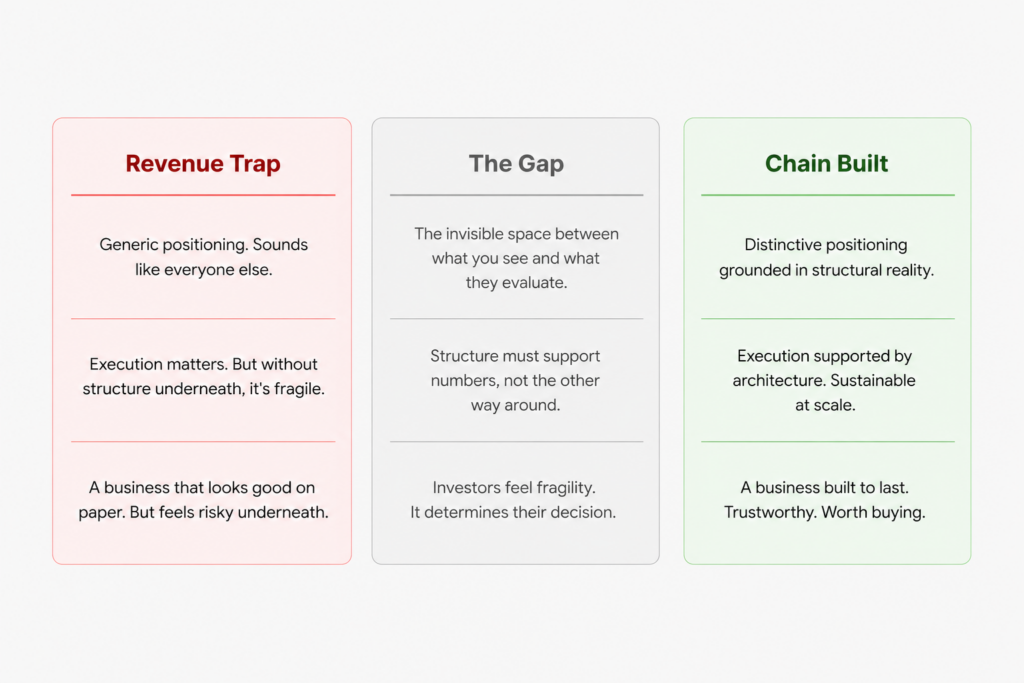
We call this condition the Revenue Trap. It is not a strategy failure. It is not ignorance. It is a completely rational response to the signals available. Revenue grows, confidence rises, and the system reinforces itself. Until the moment it is tested.
What a business is actually built on,
Revenue is the last layer. Not the foundation. When you only manage revenue, you are managing the output of
a system you have never examined.
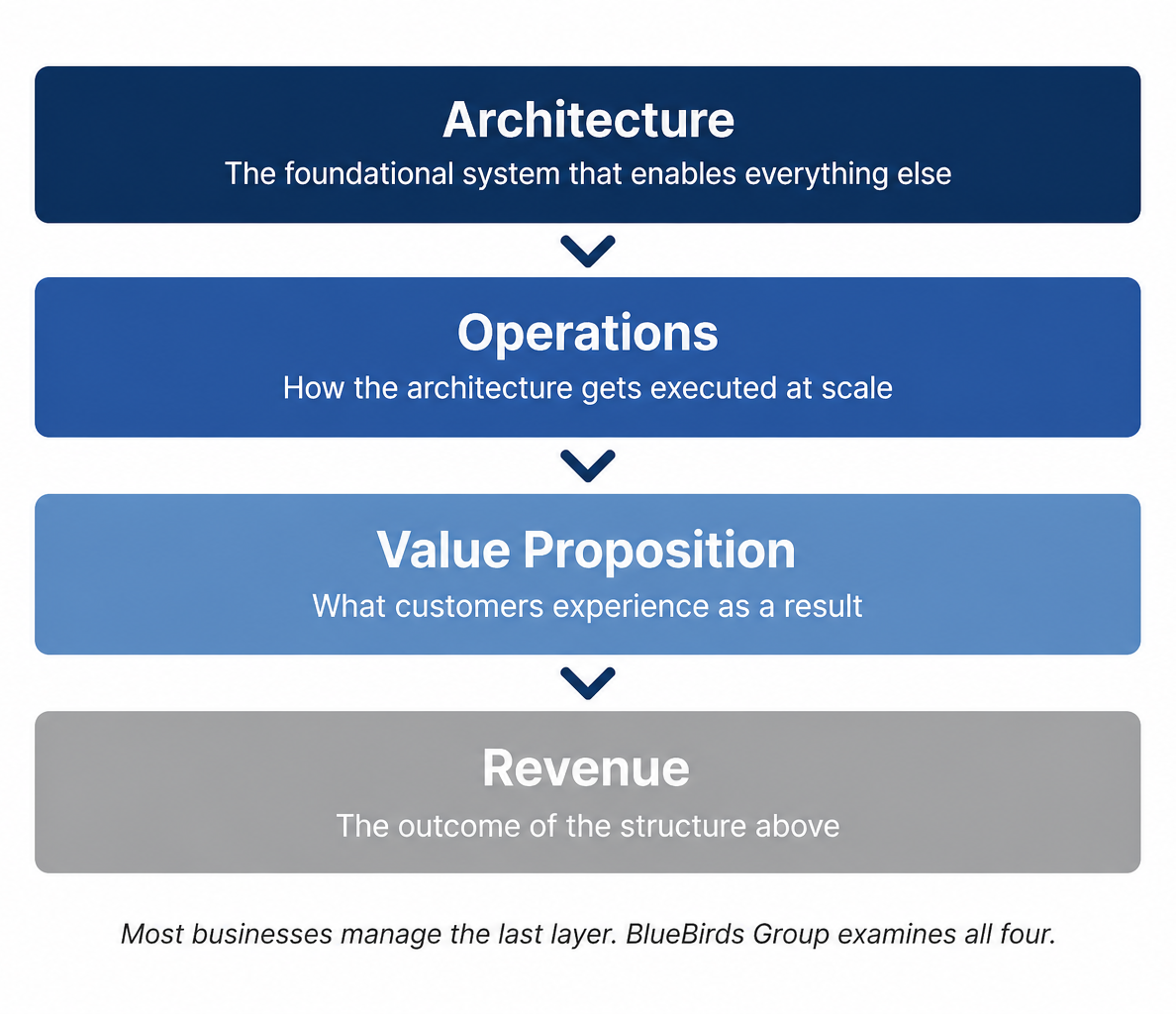
What you are building versus what capital actually evaluates.
The gap between founder perception and investor evaluation determines your outcome.
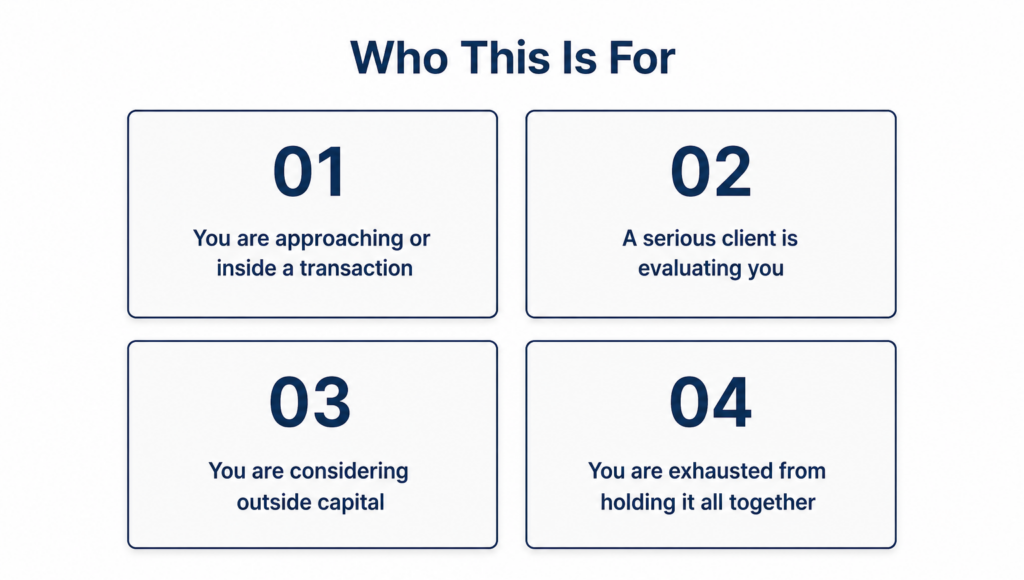
This work is for growth-stage founders facing one of these forcing events.
The Revenue Trap is a growth-stage problem. It affects founders who have built real revenue, have a team, have clients, and have proven the model. The problem is not that they are failing. The problem is that the architecture underneath their success has not been examined. And that examination becomes unavoidable at a specific moment.
We find what is fragile inside the business and turn it into clear priorities your team can execute. This is how we make the business easier to run, easier to trust, and easier to grow.
A simple 4-step discovery system
1. Define the business question
We start with one clear question: what decision are you trying to make in the next 3 to 12 months? Growth, hiring, pricing, expansion, cleanup, or preparing for investors later. This sets the focus and keeps the work practical.
2. Map what drives results
We map how money is made, where time is lost, and where the business depends on you. We look for weak points that create stress, confusion, or inconsistency across the team.
3. Surface findings and priorities
You get a short memo that shows what is true, what is unclear, and what needs attention first. We turn that into priorities your team can execute, without extra noise.
4. Turn it into an operating plan
We translate the priorities into clear owners, next steps, and a simple weekly rhythm to keep progress moving. The goal is steadier execution, less founder dependency, and fewer surprises.
This is the short version. The full BVEA™ workflow is shown on the What We Do page.

Growth is not the same as value.
Many businesses grow revenue without building the structures that make them stable, trusted, and able to run without constant founder intervention.
Over time, misalignment between leadership, money, and the market quietly erodes value.
It often shows up later as stress, inconsistency, and surprises in the numbers.
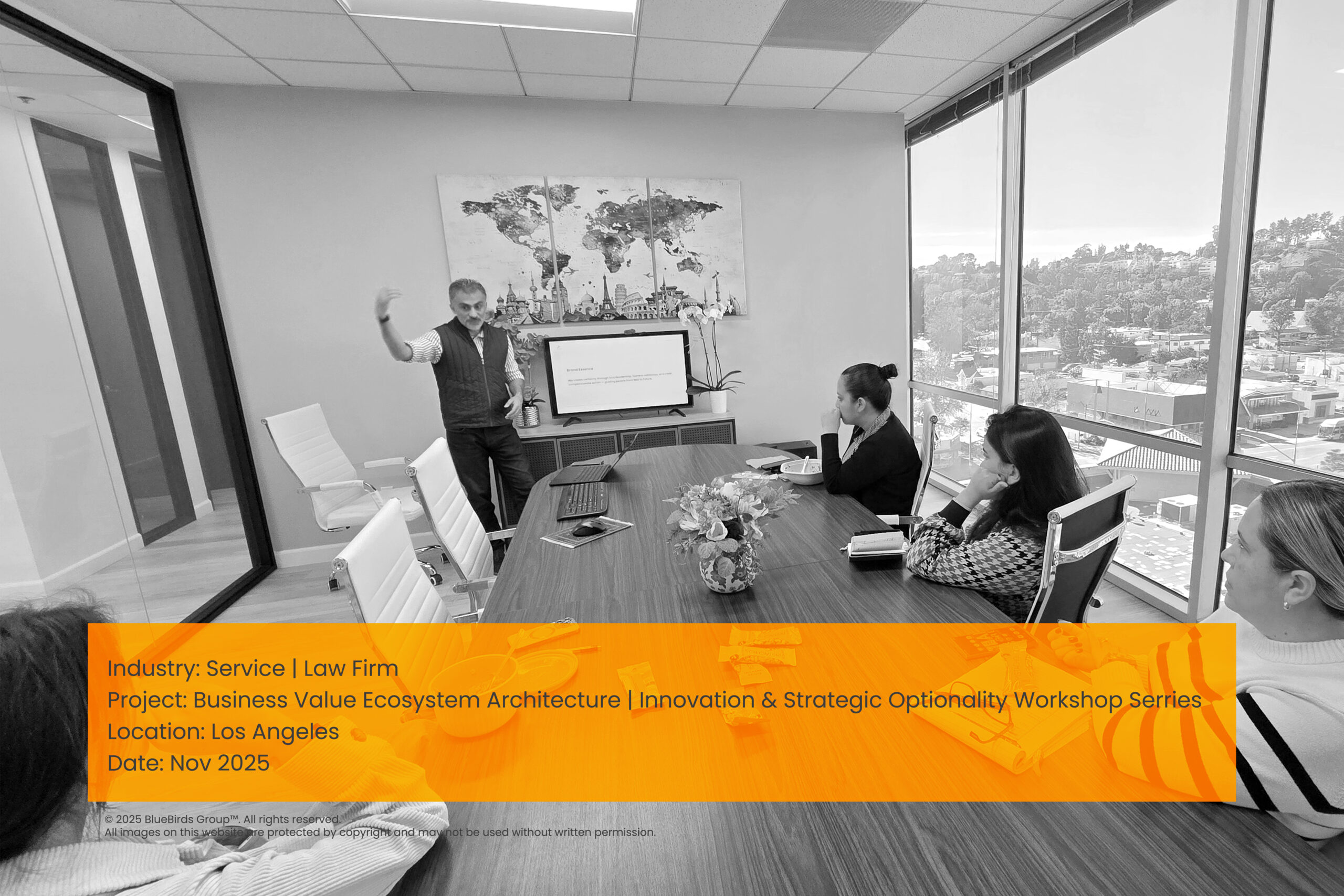
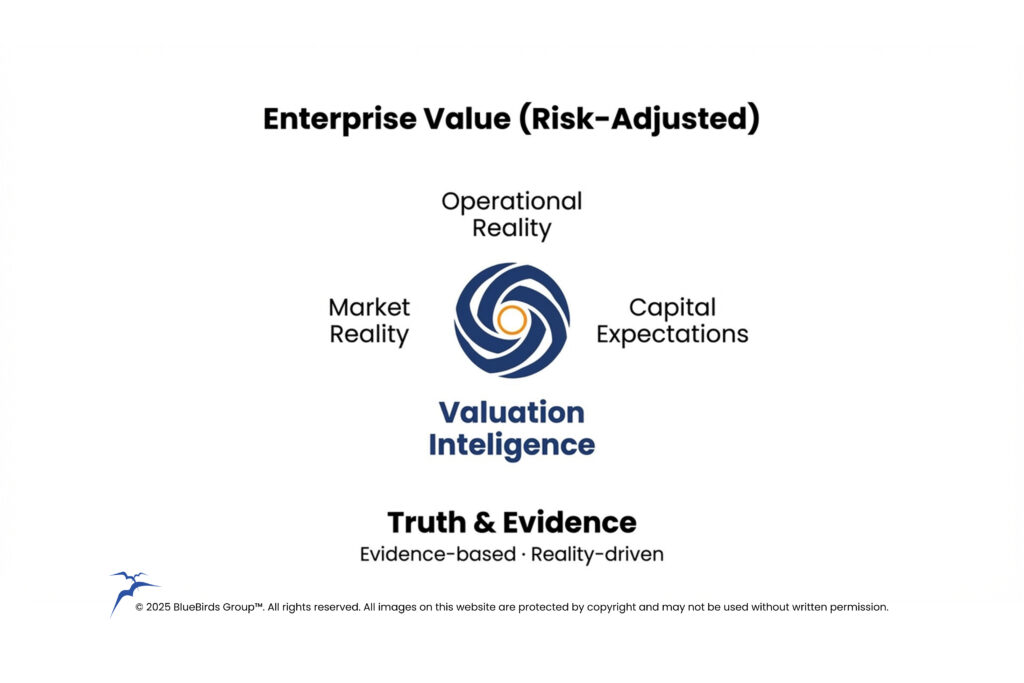
We look at three realities at the same time:
- • How the business actually runs day to day
- • What the market rewards and punishes
- • What your growth goals require from the business
- • A short memo that shows what is true and what needs attention
- • Clear priorities with owners and next steps
- • A simple weekly rhythm to keep progress moving
You do not need to stop
Building a durable business structure is not about constraining growth. It is about building growth on a foundation that holds. The businesses that last are not the ones that grew fastest. They are the ones built in a way that withstands pressure.