Spirit is worth studying because it looks like something many businesses mistakenly trust.
From the outside, Spirit had visibility, volume, and a clear value promise. Millions of customers used it because the tradeoff felt worth it. In many industries, that kind of demand is interpreted as strength. But there is a difference between usage and preference. There is a difference between being selected and being accepted. And there is a difference between growth and durability.
Spirit also went through a period where its strategic options narrowed at the same time. The attempted acquisition path closed. Operational pressure tightened. And the business was forced into harder decisions with less room to move. That is the point of this case study. It shows how a company can stay active while its option set shrinks underneath it.
This is exactly what business fragility looks like before it becomes a headline.
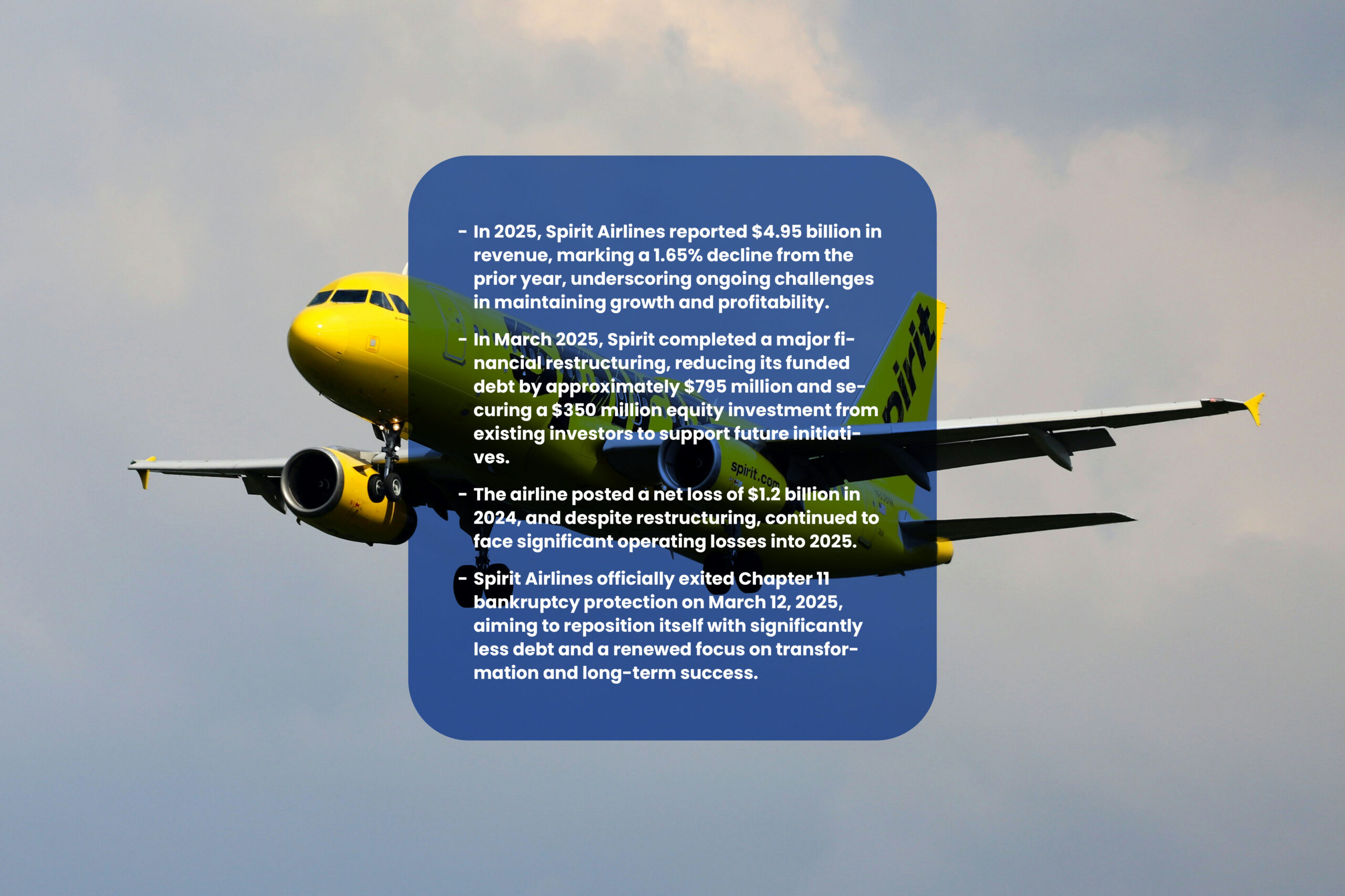
Spirit had revenue activity. What it did not have was financial durability.
This is one of the most common failure patterns in business, activity creates the feeling of health while the economic structure quietly loses resilience. Leadership can remain busy for a long time with the system is becoming less forgiving.
In BVEA™, Pillar 1 is not “did you grow.” It is “does your economic reality create room to breathe when conditions tighten.” When that room disappears, every decision becomes urgent. Urgency becomes the operating system. And strategy becomes reaction.Spirit’s model depended heavily on a narrow advantage, being the lowest-price option.
That can work for a period of time. But it is structurally fragile because it has only one form of protection. If competitors match price, if costs move against you, or if operations get disrupted, the hit lands across the entire system at once.
You can feel this pillar in any business that wins on one lever and assumes that lever will remain defensible. A single-lever business is not “focused.” It is exposed.
Ultra-low-cost is a strategy, not a guarantee.
The durable version of a low-cost model always has a second gear. Second gear means the business can improve margin, evolve the offer, or change the customer mix without breaking its identity. When a company does not build that second gear early, adaptation becomes expensive. It arrives late, under pressure, and with less credibility. The changes might make sense internally. But the market sees them as inconsistency, not evolution.
This is where fragility accelerates.
Spirit’s brand was strongly associated with price. But price is not market power. Price is a claim that can be matched. The valuation-level distinction is simple. Many customers used Spirit as a tradeoff, not a preferred solution. That difference matters because tolerated demand behaves differently from chosen demand. When a brand is tolerated rather than chosen, you do not get pricing power. You do not get loyalty. You do not get forgiveness. And when conditions tighten, you lose time, because customers exit quickly.
The honest test is simple. If you disappeared tomorrow, would customers miss you, or would they replace you quickly? If the answer is replace, the brand is not acting like an asset. It is acting like a transaction. Important precision we will keep clean. In Spirit’s case, Brand & Market Power is best described as a primary fragility amplifier. Weak pricing power makes every shock more expensive and reduces the company’s ability to buy time.
Spirit’s leadership was not incompetent. It was trapped inside a narrowing structure.
In fragile businesses, leadership becomes reactive not because people are incapable, but because the operating system gives them no room to plan, pivot, and execute change before pressure becomes a crisis. A business can be operationally busy and still structurally brittle. Pillar 5 fragility shows up when execution depends on constant firefighting and the organization cannot shift direction without destabilizing itself.
There is no clear evidence that Spirit had a technology or data advantage that created resilience.
Technology leverage is not a “nice-to-have.” In a durable business, it shortens decision cycles, reduces operational friction, and keeps the system consistent under stress. When technology leverage is weak, the organization senses problems late and responds slowly. That delay becomes margin leakage, service disruption, and compounding customer distrust. Under real pressure, slow sensing and slow decisions become structural fragility, not an IT problem.
Spirit’s optionality looked thin.
Strategic optionality means the business has credible adjacent moves when the primary model gets pressured. Not cosmetic changes. Not late-stage imitation. Credible directions customers and investors can believe in. When a company is fully committed to one segment, one positioning, and one way of winning, every disruption becomes existential. That is what this pillar flags, not “lack of creativity,” but lack of credible paths forward.
Spirit’s story is also a transaction story.
When strategic options depend on deal outcomes and those outcomes fail, the business is forced into a harder truth. The structure has to stand on its own. Transaction readiness is not just “find a buyer.” It is clean governance, credible reporting, and a coherent strategic story an acquirer can trust. When external paths tighten, governance and readiness become the difference between flexibility and constraint.
This pillar matters because it reveals whether the business has clean options when pressure rises, or whether it is forced into a reset under the worst possible timing.
JetBlue’s acquisition of Spirit, which would have seen JetBlue absorb the budget carrier and effectively double its size, was blocked early last year following an antitrust trial in federal court in late-2023. JetBlue had argued that the merger was the only way the airline could grow enough to compete effectively against the major U.S. airlines — American Airlines, Delta Air Lines, United Airlines and Southwest Airlines — that control about 80% of the country’s air travel market.
https://thepointsguy.com/news
Spirit’s narrative leaned heavily on one idea: growth.
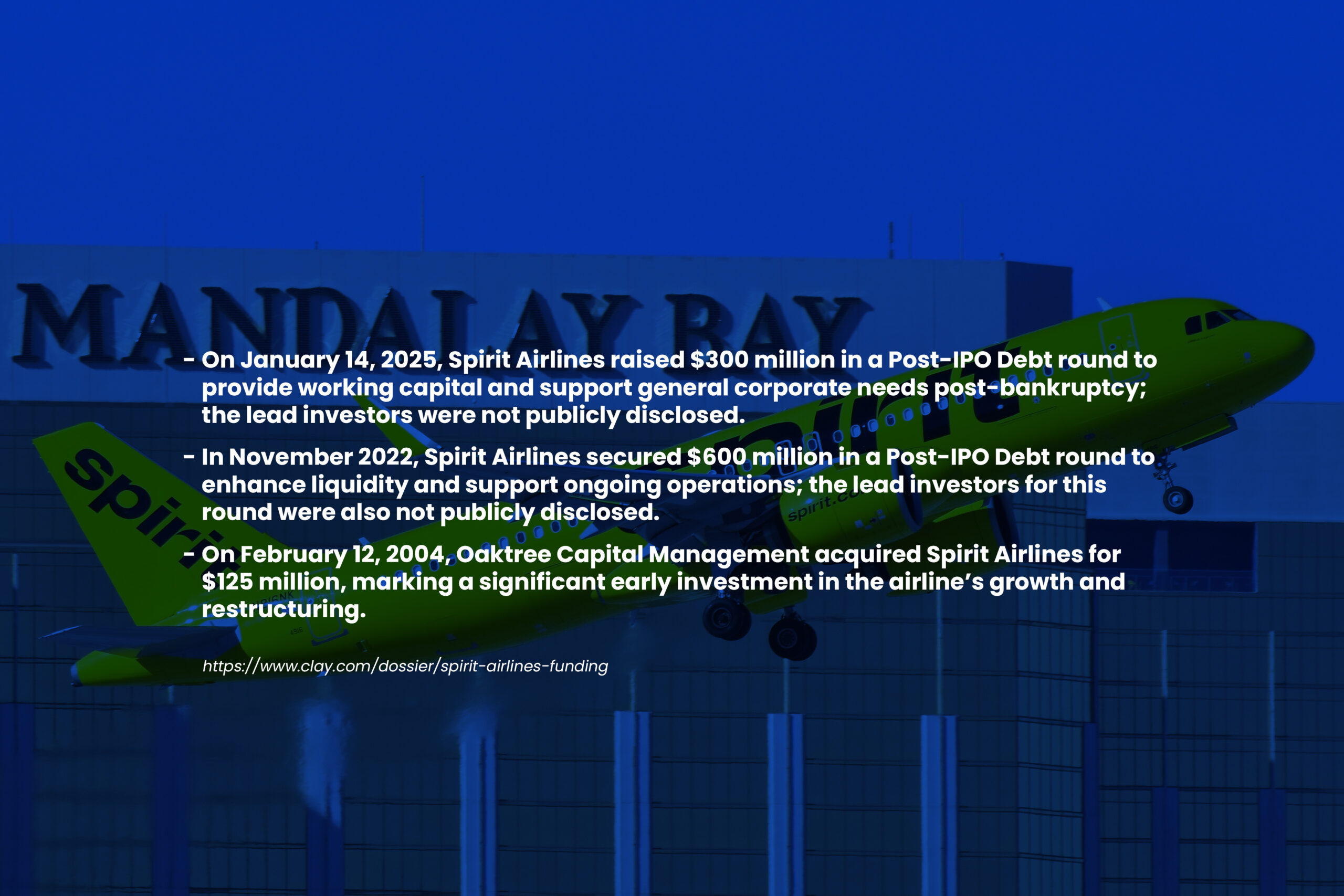
A growth-only story collapses when growth slows. A durable capital narrative survives turbulence because it is rooted in structural depth; Market power, resilient economics, operational reliability, and believable leadership adaptation. When that depth is missing, capital becomes a lifeline, not a confidence signal. Investors stop asking what the business can become and start asking how long it can hold.
That is Pillar 9 fragility, the narrative cannot survive pressure.

Spirit’s fragility was not sitting in one department. It was clustered across the system.
Four pillars land at Critical: Risk & Fragility (2), Brand & Market Power (4), Innovation & Strategic Optionality (7), and Strategic Narrative & Capital Alignment (9). That combination is the signature of a company running out of credible moves. Not because it is inactive, but because it is structururally narrowing.
Three pillars land at High: Financial Reality & Cash Truth (1), Business Model & Scalability (3), and Governance & Transaction Readiness (8). This is where the squeeze becomes real. High fragility in economics, model adaptability, and transaction flexibility means less time, less room, and fewer clean paths to reset.
Pillar 5 sits at Medium to High: Organization & Execution Independence (5). This usually shows up as leadership being pulled into reaction and recovery instead of redesign. The organization can keep moving, but it cannot pivot cleanly under pressure.
Pillar 6 is Medium: Technology & Data Leverage (6). It still matters because it affects decision speed and consistency, but in this case it is part of the drag, not the core break.
One crucial point for interpretation: in Spirit’s case, Brand & Market Power (4) acted as a primary fragility amplifier, not the only cause. Weak pricing power compresses time. When time disappears, every other fix becomes harder, more expensive, and more dependent on outside outcomes.
This is what business fragility looks like in the real world: motion on the surface, narrowing options underneath, and a system that cannot absorb pressure without losing future value.
Now step back and look at what this pattern implies, because the same fragility stack shows up in founder-led businesses and professional services more often than people realize.
Spirit is an extreme example. The pattern is not.
I see versions of this in law firms, consulting practices, and founder-led businesses constantly. The scale is different. The structural logic is the same.
I see businesses with no second gear in their model, brands customers tolerate but never actually choose, leadership teams so deep in reactive execution they have lost the ability to think forward, and capital stories that only hold together when conditions stay favorable. Remove the favorable conditions and the fragility becomes visible overnight.
These are not aviation problems. They are structural problems. The businesses that avoid this outcome are not lucky. They are structurally aware. They run diagnostics before the crisis forces one. They understand the difference between revenue activity and business durability. And they act on signals while there is still room to move.
Fragility rarely shows up as one big mistake. It builds quietly. The signals show up across the nine pillars long before the headline moment: the brand erodes, the model narrows, optionality closes, and the narrative thins. By the time a crisis is visible from the outside, the structure has usually been under strain for a while.
If any of these pillars felt familiar as you read this, pay attention to that.
At BlueBirds Group™, we run BVEA™ diagnostics to surface structural fragility early, while there is still room to move. This is not a checklist. It is a structured process that forces clarity and requires the discipline to act on what is true.
Not to tell you what you already know. To show you what the structure is already telling you.
The question is whether you want to hear it now or later.

Aaron Sed is the founder of BlueBirds Group™, a valuation intelligence firm. He developed the BVEA™ framework to help founders and leadership teams identify structural fragilities that quietly reduce enterprise value. His work bridges brand power, business architecture, and operational resilience so businesses become more durable, transferable, and easier to trust.
Ref:
U.S. Department of Justice materials related to the JetBlue acquisition decision.
Spirit Airlines Investor Relations press releases and restructuring communications.
Major aviation trade coverage on fleet and engine-related availability constraints
This site uses cookies to offer you a
better browsing experience.